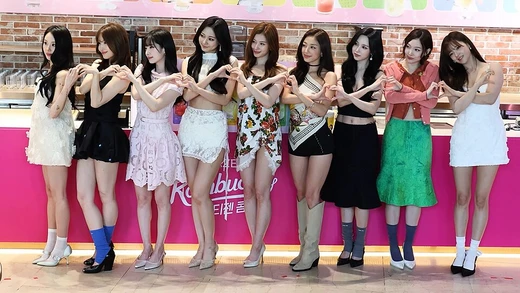
Ooh-Ah-Yoo
A burst of color and laughter that reminds everyone—heroes included—why they started dancing in the first place.

Ooh-Ah-Yoo is a lighthearted, rhythm-driven episode-arc in the Twice universe that serves as a tonal breath between heavier narrative stretches. It leans into the franchise's signature blend of playful energy and emotional sincerity, letting characters express joy, surprise, and small victories through music, movement, and spontaneous interaction rather than exposition.
Within the broader season structure, Ooh-Ah-Yoo functions as a connective tissue arc: it re-establishes ensemble chemistry, plants a few quiet seeds for later emotional payoffs, and reminds the audience that the world of Twice is as much about the in-between moments as the climactic ones.
- Type
- Episode / short arc
- Tone
- Playful, musical, warm
- Narrative role
- Ensemble reconnection and tonal reset
- Thematic core
- Joy as resistance; small moments of wonder
- Position in season
- Mid-season breather arc
Lore & Background
In the Twice universe, Ooh-Ah-Yoo is less a plot event than a feeling made visible. The arc centers on a spontaneous gathering where the ensemble drops their usual roles and lets themselves be surprised—by a melody, by a friend's offhand comment, by the way light falls through a window at a particular hour. The title itself, a string of unscripted vocal exclamations, captures the arc's thesis: the most honest reactions are the ones you can't plan.
Thematically, the arc plays against the weight of the surrounding story. Characters who have been carrying grief, duty, or fear are given permission to simply *be* for a few scenes. A character might hum while cooking. Another might spin in a doorway for no reason. These small, unglamorous gestures become the emotional anchor the audience returns to in darker later episodes.
The arc also subtly reinforces the universe's core philosophy: that connection is not a grand gesture but a repeated, low-stakes choice to show up, to laugh, to say the silly little sound that escapes before you can think it into something serious. Ooh-Ah-Yoo is that sound, stretched across a full episode-arc.
In Their Own Story
The kitchen is too small for six people, and everyone knows it, and no one leaves. Someone has burned the rice again—third time this week—and the smell is doing its best to convince the room that the building is on fire. A hand pats the back of another's neck. A spoon taps a rhythm against a ceramic bowl, slow at first, then faster, and suddenly two more are tapping, then a foot, then someone is humming a melody that doesn't belong to any song anyone can name. The window is open. Evening light is going amber on the counter. Someone says a word—just a sound, a little pop of air and consonant—and the whole room exhales in unison, shoulders dropping, and for one unguarded second nobody is a character in a story. They're just people in a too-small kitchen, smelling of char and sugar, tapping spoons, alive. Then the rice is scraped into a bowl, passed around, and the night goes on.
Reader's Guide
Ooh-Ah-Yoo opens with a deliberately low-stakes scene: the ensemble in a shared domestic space, doing nothing important. The first beat is sensory—smell, sound, texture—establishing that this arc lives in the body, not the plot.
The turning point arrives quietly: one character initiates a small, rhythmic action (tapping a spoon against a bowl). The arc's magic lies in how that single impulse spreads—not through dialogue or direction, but through the unconscious mimicry of people who trust each other. Watch for the moment when the rhythm syncs up: that's the arc's emotional climax, disguised as a throwaway beat.
To experience the arc as intended, pay attention to the negative space—the silences between spoon taps, the pause before someone laughs, the way the camera lingers on a half-eaten bowl of rice. The arc teaches its own viewing language: read the body, not the script.
For writers and analysts, note the structural inversion: most arcs build toward a dramatic reveal; Ooh-Ah-Yoo builds toward a quiet release. The arc's payoff is not a secret uncovered but a tension dissolved. It's a masterclass in using low stakes to create high emotional resonance.
Did You Know?
- The title 'Ooh-Ah-Yoo' is deliberately untranslatable and non-specific—it is meant to be a sound the audience makes in their own throat while watching, not a word with a dictionary definition.
- The arc's central kitchen scene was designed to feel like a single continuous take, with no hard cuts, reinforcing the 'one unbroken moment' theme.
- The spoon-tapping rhythm that starts the group's impromptu song is intentionally in no standard time signature, mirroring the arc's rejection of structure in favor of spontaneity.
- Fans have noted that the same small domestic details (the too-small kitchen, the recurring burned-rice gag) reappear in later arcs, functioning as a visual shorthand for 'home' across the season.
- The melody that no one can name in the kitchen scene was actually improvised by the voice actor on set—the other actors' reactions of genuine surprise were kept in the final cut.
More in Episodes & Arcs
Elsewhere in the Twice universe
Spotted an error? Know more?
This is a living reference — every entry is fact-audited, and reader corrections feed straight into our audit queue. Suggest an edit · See this site's audit record