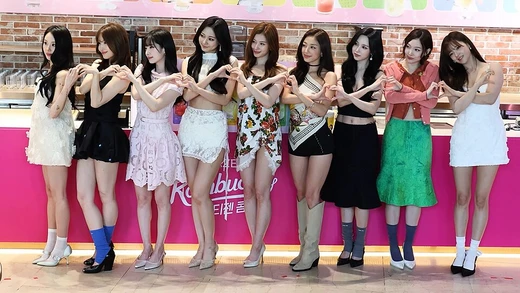
Dance The Night
Seven girls, one floor, a night that refuses to end.

Dance The Night is a concept era for the K-pop group Twice that leans into the group's signature identity as a high-energy, choreography-driven act. Within the broader arc of Twice's discography, this era represents a celebration of collective movement, joy, and the communal experience of dancing together—themes that have been woven into the group's storytelling since their debut.
As a fan-recognized arc, Dance The Night sits within the tradition of Twice's most exuberant, party-oriented concepts. It invites the audience (and the fandom, ONCE) to step into a world where the night belongs to the dancers, the choreography is the narrative, and the group's chemistry on the dance floor becomes the central spectacle.
- group
- Twice
- label
- JYP Entertainment
- member_count
- 7
- genre_focus
- Dance-pop / K-pop
- concept_theme
- Nighttime celebration, collective choreography, joy of movement
Lore & Background
In the world Twice builds for its fans, every concept era is a small universe with its own visual language, emotional palette, and narrative logic. Dance The Night occupies a space where the group's well-known 'feel-good' identity is pushed to its most kinetic extreme. The era treats the dance floor not as a stage but as a lived-in world: neon-lit corridors, open-air rooftops at midnight, and the kind of spontaneous, laughing energy that suggests the performance is less a show and more a gathering of friends who refuse to go home.
The choreography in this era is designed to feel inclusive and participatory. Rather than emphasizing sharp, isolating precision, the movement vocabulary leans into group formations, call-and-response moments, and simple-but-infectious hooks that fans can mirror. This reflects Twice's broader philosophy that their music is a shared experience between the group and the audience, with the dance serving as the bridge.
Visually, the era draws on saturated color palettes—electric blues, hot pinks, and warm golds—that evoke late-night cityscapes and the glow of a party in full swing. Outfits balance playful silhouettes (oversized jackets, cropped tops, flowing skirts) with enough structure to make the choreography read clearly on camera. The overall aesthetic is one of confident, unapologetic fun: this is not a concept about longing or heartbreak, but about the present moment and the physical joy of moving with others.
In Their Own Story
The last train had left an hour ago. The rooftop above the practice studio was empty except for the seven of them, still in their rehearsal clothes, hair half-escaped from its clips. Momo stretched a leg across the railing and grinned. "One more." Nayeon was already hitting the beat on her phone speaker. Sana grabbed Mina's hand. Jihyo counted them off in that low, steady voice that made even the most exhausted body remember its rhythm. They danced the whole thing again—sloppy, laughing, arms swinging wider than the choreography called for—while the city below hummed its indifferent lullaby. No cameras. No audience. Just the eight-count and the feeling of seven bodies moving as one, and the night stretching out like it had nowhere else to be.
Reader's Guide
Central theme: collective joy and the physicality of shared movement. The era positions dancing not as performance-for-others but as an act of mutual celebration among the group and with the audience.
Shift from the previous era: where earlier concepts often built emotional tension before releasing it (heartbreak, longing, quiet confidence), Dance The Night opens already in full motion. There is no slow build; the energy is immediate and sustained. Visually, the palette warms and brightens, and the framing in promotional material favors wide group shots over individual close-ups, reinforcing the 'togetherness' message.
Music-video narrative: the MV follows a loose, almost episodic structure—different locations, different micro-scenarios, but all converging on the same dance. It reads less like a linear story and more like a montage of a night that keeps escalating. The group moves through spaces (a parking lot, a neon alley, an open field at dusk) and the choreography adapts to each environment.
Fan perception: ONCE consistently identifies this era as one of the group's most 'pure fun' moments. It became a go-to for fan edits, dance-along videos, and casual practice clips, cementing Twice's reputation as the group you dance to when you want to feel alive rather than moved to tears.
Did You Know?
- Twice's choreography is famously designed with fan participation in mind; several signature moves from their dance-heavy eras became viral dance-along challenges across multiple countries.
- The group is known for rehearsing choreography for weeks before a release, often refining small arm angles and timing hits to make the movement feel effortless on camera.
- Twice members have spoken in interviews about how the 'fun' energy of their concepts is intentional—a deliberate choice to give fans a musical space of joy alongside the more emotional tracks in their catalog.
- The group's dance concepts often incorporate simple, repetitive motifs specifically so that live audiences and at-home fans can join in without needing to memorize complex sequences.
More in Eras & Concept Arcs
Elsewhere in the Twice universe
Spotted an error? Know more?
This is a living reference — every entry is fact-audited, and reader corrections feed straight into our audit queue. Suggest an edit · See this site's audit record