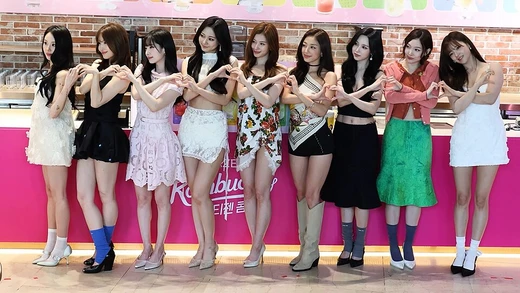
Like OOH-AHH
A spark of playful pop that became a rallying cry for the ONCE fandom.

"Like OOH-AHH" is a track within the TWICE discography, a K-pop girl group formed under JYP Entertainment. The song sits within the group's broader sonic identity—bright, melodic pop built on layered vocal harmonies, bouncy rhythmic grooves, and an infectious sense of joy that has defined TWICE's public image since their debut. In fan communities it is often discussed as an example of the group's signature "sweet but with an edge" production style, where catchy hooks are paired with slightly sassy or playful lyrical framing.
As an unofficial fan-encyclopedia entry, this page celebrates how the track fits into the wider narrative fans have built around TWICE's evolution: from a debut-era sound to a more mature, genre-blending identity. It is treated here as a touchstone for the group's early-to-mid career aesthetic and the communal energy their live performances are known for.
- Group
- TWICE
- Label
- JYP Entertainment
- Genre
- K-pop / Pop
- Members
- 9 (Nayeon, Jeongyeon, Momo, Sana, Jihyo, Mina, Dahyun, Chaeyoung, Tzuyu)
Lore & Background
TWICE has always positioned themselves as a group whose music is meant to be *felt* in the body first—head-bobbing rhythms, call-and-response vocal lines, and choreography designed for group synchronization. Tracks in the "OOH-AHH" vein sit squarely in that tradition: short, punchy vocal interjections that double as audience chants, giving fans an immediate, low-barrier way to participate in a live show. The production leans on bright synth stabs, a driving four-on-the-floor pulse, and a vocal arrangement that rotates the spotlight among members so every voice gets a moment to cut through the mix.
Within the fan-built lore of the "Twice universe," songs like this are often read as narrative milestones—moments where the group's confidence is on full display, where the nine members lock into a shared groove and the boundary between stage and audience dissolves. The playful, almost teasing tone of the lyrics is interpreted by fans as a small act of defiance against the expectation that girl groups must always sound earnest or vulnerable; here, the group simply *has fun* and invites everyone else to do the same.
The track's lasting resonance in fan communities comes less from any single lyrical line and more from its *energy*: the way it functions as a crowd-activator, a dance-break anthem, a shared shorthand for the particular joy TWICE brings to a performance. In fan-made timelines and "era" discussions, it is frequently grouped with other high-energy tracks as part of the group's "feel-good" canon.
In Their Own Story
The arena lights dim to a deep violet. Nine silhouettes stand in a loose arc at the edge of the stage, hands clasped, breathing in unison. A single synth note hums—low, warm, almost a heartbeat. Then the drop hits: a staccato burst of claps, a kick drum that lands right in the sternum, and the first vocal phrase cracks open the silence like a match struck in a dark room. The crowd's roar swells, and for one stretched-out moment the only thing that exists is the shared pulse of ten thousand people swaying in the same rhythm. Somewhere in the back row, a fan holds up a lightstick and mouths the hook along with the group, eyes closed, grinning like the whole world just handed them a small, perfect secret. The stage washes in gold. The beat doesn't stop. It doesn't need to.
Reader's Guide
TWICE formed under JYP Entertainment and debuted in 2015 with the single "OOH-AHH," immediately establishing the bright, harmonically rich pop identity that would define their career. Their early singles—"Cheer Up," "TT," "Signal," "What Is Love," "Feel Special," "Fancy," "Yes or Yes," "Alcohol-Free," "Talk That Talk"—each pushed the group's sound slightly further while maintaining the core of catchy, dance-forward production. The group consistently ranked among the top-selling and top-streaming acts in South Korea and Japan, and their music videos regularly amassed hundreds of millions of views on YouTube, cementing them as one of the most globally recognized girl groups of their generation.
Their influence on the wider K-pop landscape is significant: TWICE helped normalize a "joy-first" performance philosophy for girl groups, showing that high-energy, smile-driven stage presence could coexist with technical vocal and dance precision. They became a benchmark for group choreography synchronization and for the way a nine-member ensemble can rotate vocal focus while maintaining a unified sound. Their longevity—maintaining relevance across multiple "eras" and genre shifts—made them a case study in sustainable K-pop group strategy.
In fan culture, each TWICE album cycle is treated almost like a new chapter in an ongoing story, with dedicated "era" aesthetics, fan-made lore, and communal rituals around releases. Tracks like the ones in the "OOH-AHH" family are remembered as the sonic fingerprint of that early, exuberant chapter—the sound of a group finding its voice and inviting the world to sing along.
Did You Know?
- TWICE's fandom is officially called ONCE, a name that plays on the idea of being a 'once in a lifetime' experience shared with the group.
- The group is known for a signature group dance move called the 'Cheer Up' finger-heart and the 'TT' crying gesture, both of which became widely imitated emotes in online culture.
- TWICE has maintained a nine-member lineup since debut, a rarity in K-pop where member departures are common, and fans often cite this stability as a key part of the group's identity.
- Their music videos are noted for high production values, colorful set designs, and choreography that emphasizes synchronized group formations as much as individual solos.
More in History & Legacy
Elsewhere in the Twice universe
Spotted an error? Know more?
This is a living reference — every entry is fact-audited, and reader corrections feed straight into our audit queue. Suggest an edit · See this site's audit record