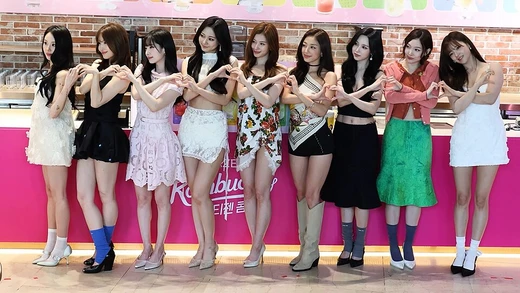
TWICELIGHTS World Tour
Nine lights, one stage, and the sound of a fandom that never dims.

TWICELIGHTS is a landmark live-performance event in the career of TWICE, the nine-member K-pop girl group under JYP Entertainment. Conceived as a concert experience that blends the group's signature high-energy choreography with a more intimate, visually immersive production design, it represents a maturation in how TWICE presents their music to audiences beyond the standard stadium set.
For ONCE (the fandom), the event carries particular emotional weight: it marks a phase where the group, now well past their debut era, showcases both the technical polish of years of training and the genuine joy of performing together on a large stage. It sits in the broader arc of TWICE's touring history as a bridge between their earlier, more explosive concert formulas and the refined, narrative-driven shows that followed.
- Artist
- TWICE (9-member K-pop girl group)
- Label
- JYP Entertainment
- Type
- Concert / Live tour event
- Members
- Nayeon, Jeongyeon, Momo, Sana, Jihyo, Mina, Dahyun, Chaeyoung, Tzuyu
- Fandom name
- ONCE
Lore & Background
In the broader mythology of TWICE's live career, TWICELIGHTS occupies a special niche. Where earlier concerts leaned heavily on maximalist pyrotechnics and rapid song-to-song transitions, this production leaned into atmosphere—elongated lighting cues, slower build-ups between numbers, and moments where the nine members simply stood in a pool of warm light and let the audience's voice carry the bridge. Fans on social media described it as feeling less like a concert and more like a shared, collective exhale.
The title itself, TWICELIGHTS, plays on the group's name and the visual identity of the show: each member was associated with a distinct color temperature and beam pattern, so the stage essentially became a nine-point constellation that shifted and reformed with each song. The concept was not merely decorative; it reinforced the idea that the group's identity is the sum of nine individual presences, each with its own warmth and angle.
Culturally, the event landed at a moment when TWICE was navigating the tension between their Korean home base and their global fanbase. The production team reportedly designed certain transitions and call-and-response segments to work whether the audience was a sold-out Seoul arena or a smaller overseas venue, making the show feel equally personal at 80,000 seats or 8,000.
In Their Own Story
The house lights dimmed to a deep amber, and for three seconds nobody breathed. Then a single beam—cool white, angled low—swept across the stage floor and stopped at the center mark. Jihyo stepped into it, microphone in hand, and the silence stretched just long enough to feel deliberate. Behind her, eight more beams flickered to life one by one, each a different hue, each finding its member. The opening track hadn't dropped yet. It didn't need to. The crowd's roar was the downbeat. Sana laughed, genuinely, and pressed her palm flat against the stage as if feeling the vibration travel up through the floorboards. Nayeon winked at the front row. And then the first chord hit, and the nine lights bloomed outward like a sunrise that only happened once, in that room, for that crowd, and never quite the same way again.
Reader's Guide
TWICELIGHTS was structured as a concert experience rather than a straight setlist, organized into thematic movements that shifted the emotional register across the night. The opening block leaned into the group's high-energy dance tracks, with rapid costume changes and full-stage choreography that showcased the nine-member formations TWICE is known for.
The mid-show section slowed the pace, featuring ballads and mid-tempo numbers where the lighting design took center stage. Each member's assigned beam color isolated them during solo or small-group moments, creating a visual vocabulary that fans learned to read across the run.
The closing movement brought back the biggest crowd-pleasers, and the encore was designed as a collective, almost ceremonial moment—nine members lined up, microphones down, letting the audience's chant carry the final bars.
What made the show significant in TWICE's live evolution was the restraint. After years of ever-more-spectacle productions, TWICELIGHTS proved the group could hold a room with timing, eye contact, and the simple act of nine people moving in sync under warm light. It set a template for how subsequent tours balanced production scale with the intimacy that ONCE consistently cited as the reason they kept coming back.
Did You Know?
- The lighting design assigned each of the nine members a distinct color temperature, so the stage essentially became a shifting nine-point constellation that reformed with every song.
- The show's call-and-response segments were engineered to work at vastly different venue sizes, meaning a small overseas arena and a major Seoul stadium experienced structurally similar audience participation moments.
- TWICE's live reputation for stamina—performing full choreography in sequins and heels for over an hour—was a factor in how the set was sequenced, with high-physicality numbers spaced to allow micro-recovery windows.
- The title 'TWICELIGHTS' is a deliberate portmanteau that fans quickly adopted as shorthand for the concert's visual identity, appearing in fan-made edits, color-coded lightstick arrangements, and venue decorations worldw
More in Tours & Concerts
Elsewhere in the Twice universe
Spotted an error? Know more?
This is a living reference — every entry is fact-audited, and reader corrections feed straight into our audit queue. Suggest an edit · See this site's audit record