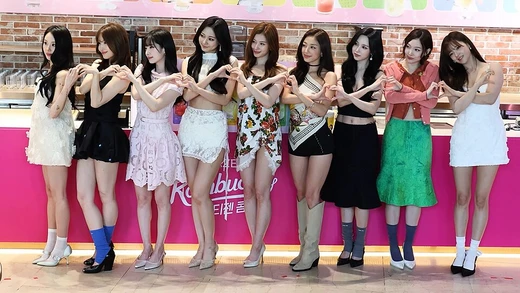
Fancy City
A city that wears its shine like armor and its secrets like shadows.

Fancy City is a recurring setting in the Twice universe, a sprawling urban landscape that serves as both a backdrop and a character in its own right. It is a place where the story's central conflicts play out on streets, rooftops, and in the spaces between its gleaming facades — a city that looks polished from the outside but hides the raw, complicated lives of the people who move through it. For viewers, Fancy City is the visual and emotional anchor of the series: its architecture, lighting, and rhythm give the narrative a distinct texture that sets it apart from generic cityscapes. Whether characters are racing through its corridors, pausing on a quiet overpass, or confronting one another in a dimly lit interior, Fancy City frames every beat of the story.
- Type
- Primary urban setting / recurring location
- Narrative role
- Central stage for the main storyline and character interactions
- Tone
- Stylized, atmospheric, layered with contrast between glamour and grit
- First featured
- Established in the opening arc as the primary environment
Lore & Background
Fancy City is never presented as a single, monolithic space. Instead, it is a patchwork of districts, each with its own visual language — glass towers catching late-afternoon light, narrow side streets where the neon hums lower and the air feels thicker, elevated walkways that stitch the upper tiers to the ground level below. This layering is deliberate: the city's geography mirrors the social and emotional distances between the characters who inhabit it. What makes Fancy City resonate with audiences is the way it feels lived-in without ever being over-explained. There is a sense that the city has a history the characters inherit but do not fully understand — old signage, repurposed buildings, a particular quality of light at dusk that seems to belong to the place rather than the sky. The setting rewards rewatching; details that read as background in an early scene gain weight once the story has turned. In the broader Twice narrative, Fancy City functions as a pressure chamber. Its beauty is real, but it is also a stage on which the characters' choices become visible, inescapable, and consequential. The city does not judge; it simply reflects back, in glass and shadow, whatever the people within it are willing to show.
In Their Own Story
The rain had just stopped when she found the letter tucked under the overpass railing. Not a storm — a slow, silver drizzle that made every surface in Fancy City look like it had been wiped clean by an invisible hand. She stood there for a long moment, the letter damp at the edges, and listened to the city breathe: the low thrum of traffic two levels up, the distant clink of a bar's door, the particular silence of a city that has seen everything and pretends it hasn't. She folded the letter, tucked it into her coat, and walked back into the glow of the streetlights, where Fancy City's reflection stretched long and liquid across the wet pavement, and for a second the whole skyline looked like it was breathing with her.
Reader's Guide
Fancy City is the visual signature of the Twice universe. Expect a stylized urban environment where architecture feels slightly exaggerated — towers that taper, bridges that arc higher than engineering would demand, windows that glow in warm amber or cool blue depending on the scene's emotional register. The color palette shifts with the narrative's mood: calm scenes bathe the streets in honeyed gold, while tense moments drain the city into steely grays and muted indigos. You'll notice the city's verticality in nearly every frame — characters often move between rooftop gardens, suspended walkways, and sunken plazas, making the space feel like a living organism with multiple circulatory systems. Pay attention to recurring landmarks: a specific neon sign flickers in the background of both a first-date scene and a breakup scene, subtly linking the two moments. The city's soundscape is just as deliberate — the hum of mag-lev trains, the echo of footsteps on metal grates, and the occasional burst of music from a passing car all layer to create a sense of constant motion, even in stillness.
Did You Know?
- Fancy City's visual design relies heavily on vertical layering — elevated walkways, rooftop spaces, and ground-level streets are often visible in the same frame, reinforcing the sense of a city built in tiers.
- The city's lighting shifts noticeably with the emotional tone of a scene, moving from warm saturated hues in calmer moments to cooler, desaturated palettes during high-tension sequences.
- Despite its glamorous exterior, the narrative consistently uses the city's less-seen corners — underpasses, service alleys, dim interiors — as the spaces where the most vulnerable and honest character moments occur.
- Fancy City functions as a recurring visual motif: characters return to the same vantage points and street-level details across the story, creating a sense of a shared, lived-in space rather than a series of disconnected
- The city's skyline was inspired by a blend of Tokyo's Shibuya district and Seoul's Gangnam area, but the designers exaggerated the vertical scale to make the city feel both aspirational and oppressive.
More in Locations & Settings
Related in Twice
Links follow this subject's own source article.
Elsewhere in the Twice universe
Spotted an error? Know more?
This is a living reference — every entry is fact-audited, and reader corrections feed straight into our audit queue. Suggest an edit · See this site's audit record